Custom websites that turn visitors into customers.
Prager designs, builds, hosts and optimizes websites from one office in Collegeville, Pennsylvania. Nothing is outsourced, the search team sits in the same building as the developers, and everything we build is custom designed for your business. No templates, ever.

What is custom web design?
Custom web design is building a website around your business, buyers and sales process rather than forcing it into a template. The layout, the content structure, the experience and the code are decided by your unique needs, not by what a pre-built theme already stuffed in.
A template is a set of decisions made without anyone knowing your business. Sometimes those decisions happen to fit. More often you spend the next three years working around them, paying for plugins to reproduce behavior a custom build would have had on day one, and explaining to visitors why the form asks for information you do not need.
Custom does not mean expensive for its own sake, and does not mean making things take longer or be more complicated than they need to be. For most, the job of their website is to establish credibility in five seconds by having a professional design that makes it trivially easy to call, get or request information, learn more, or directly make a purchase, at any time, on any device.
Page structure, content order and calls to action follow how your buyers actually decide, which is rarely the order a theme demo was built in.
Clean markup, fast rendering and structured data from the first commit, because the developers sit with the SEO team rather than receiving a ticket from them.
You own the content, the photography, and the custom design. Nothing is licensed back to you, and leaving does not mean starting again.
Why does website design decide whether people trust you?
Because visual design is the first thing people use to judge credibility, and they do it before reading a word of your copy. In Stanford’s study of 2,684 evaluators, 46.1% of all comments about a site’s credibility referred to visual design. Layout, typography, color and imagery.
That is not a statement about taste. It is a statement about speed. A visitor decides whether you look like a real company long before they can assess whether you are a good one, and a site that looks neglected reads as a business that might be too.
The same study found design-look comments reached 54.6% on finance sites, where the stakes of being wrong are highest. Home services sits in similar territory because you are asking someone to let a stranger into their house.
Source: Fogg et al., Stanford Persuasive Technology Lab, “How Do Users Evaluate the Credibility of Web Sites?” 2,684 participants. Share of evaluator comments by category. Published in 2002, so the specific design conventions have moved on; the finding that appearance dominates first-pass credibility judgement has held up in later research.
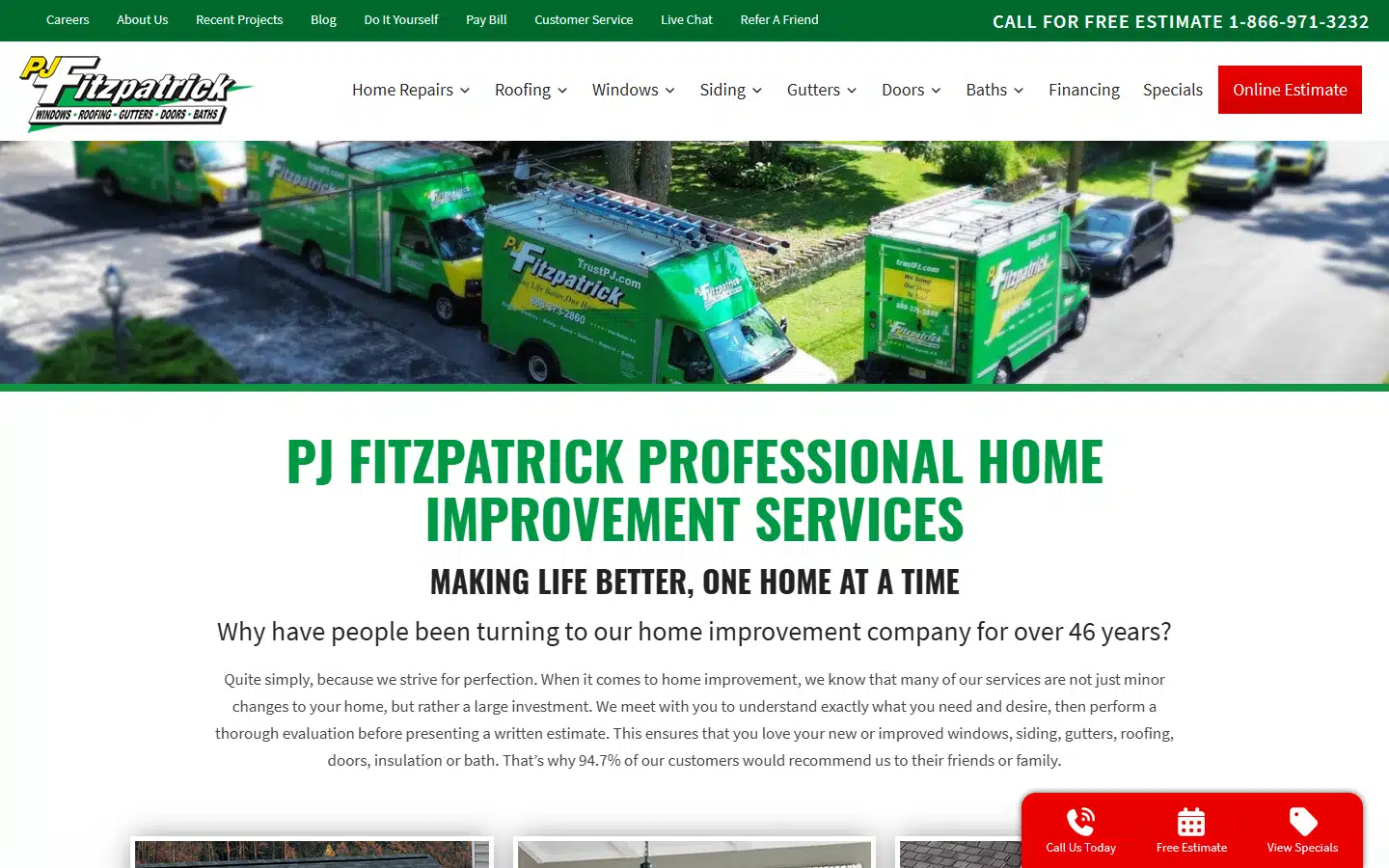
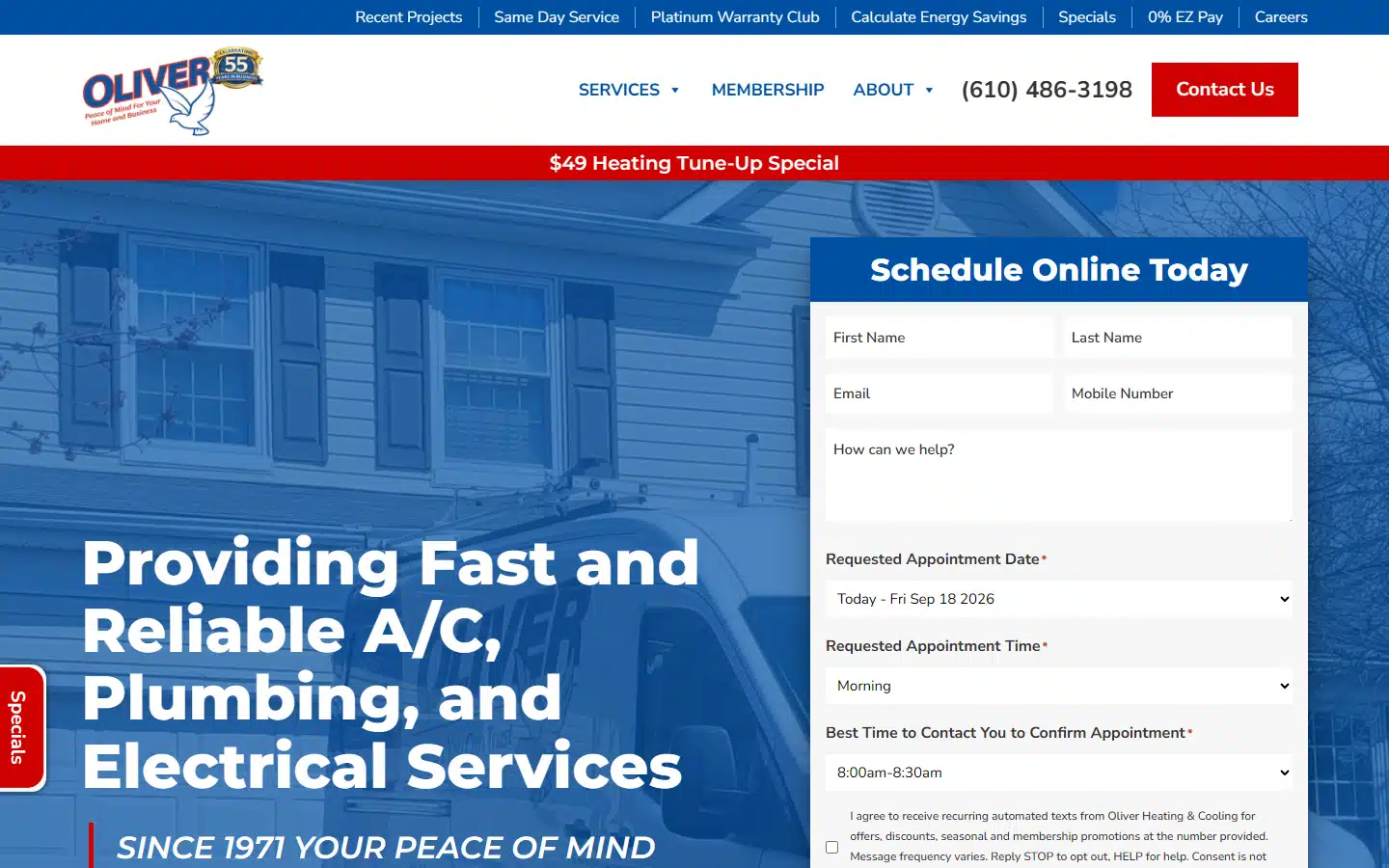
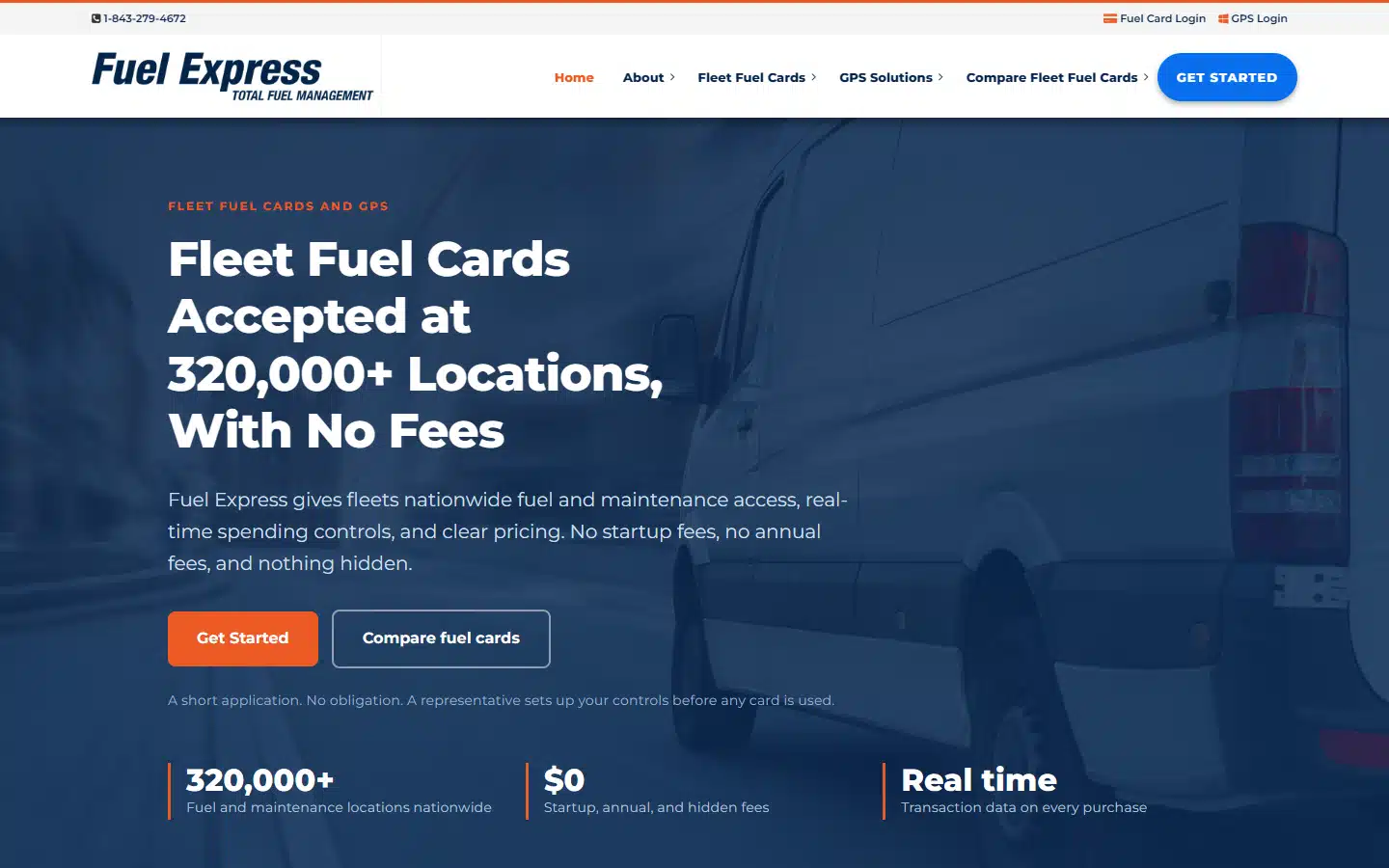
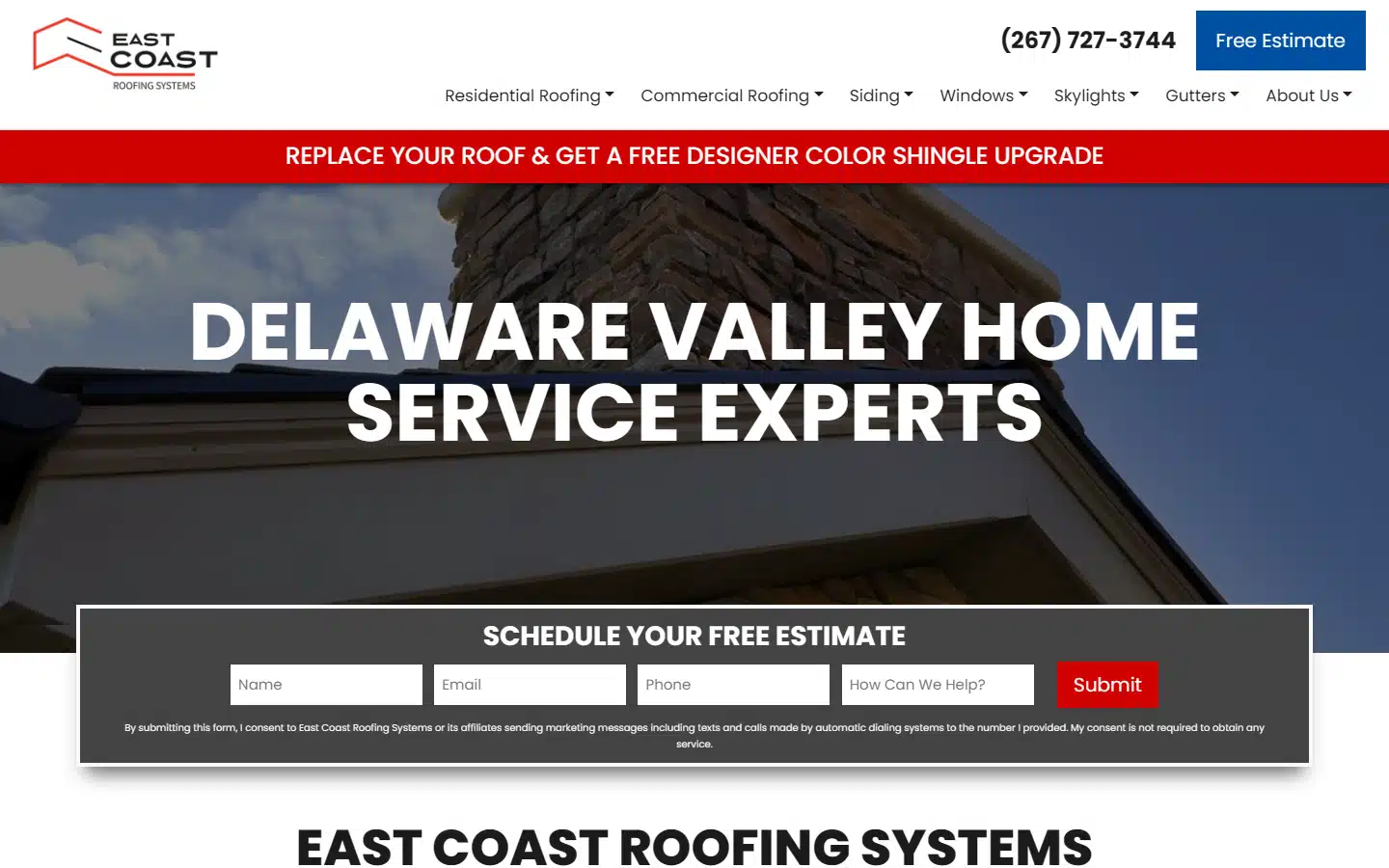
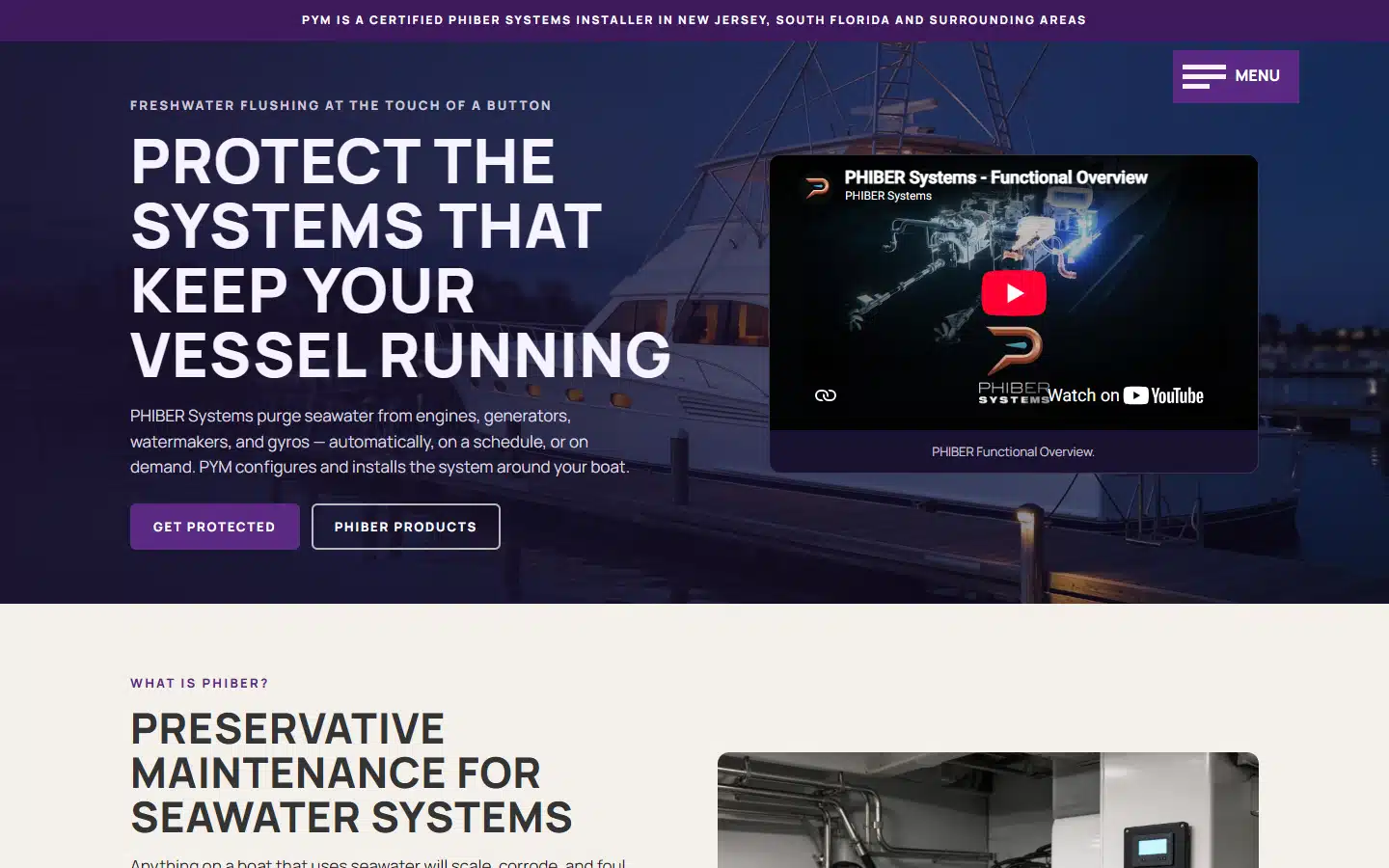
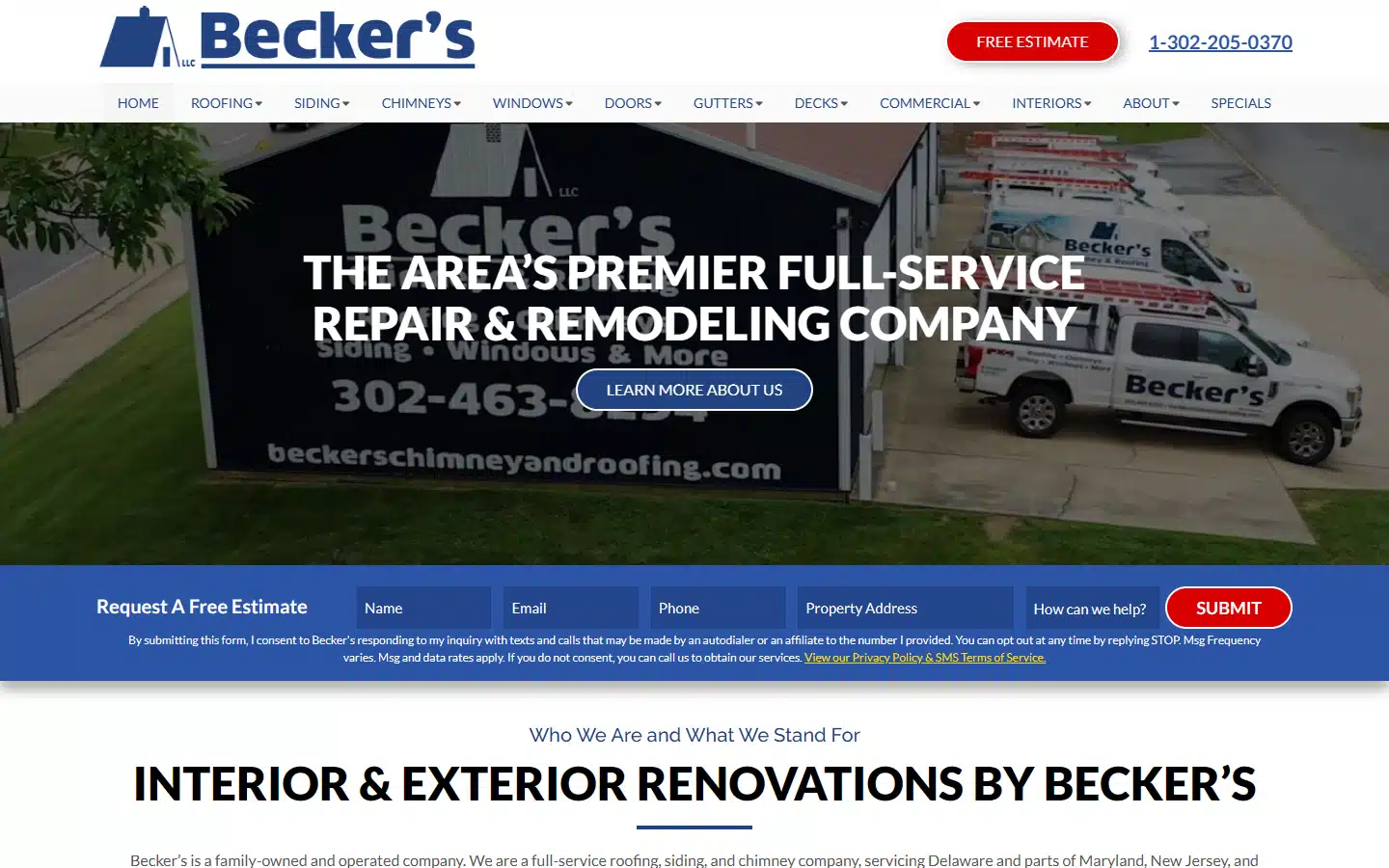
A few websites we designed, built and host
The sites below are designed here, developed here, maintained here, and are hosted here. No offshore production or white label reseller in the middle. This is a small sample of the hundreds of websites we’ve produced over the years.
Custom, template or freelancer: which should you choose?
A template is right when speed and budget matter more than fit. A freelancer is right when the scope is small and you can absorb the risk of one person. A custom build is right when the site has to produce revenue and you need it maintained for years. Most businesses pick wrong by optimizing for the cheapest quote rather than the cost of the next three years.
| DIY builder | Premium template | Freelancer | Prager custom | |
|---|---|---|---|---|
| Upfront cost | Lowest | Low | Variable | From $2,000 |
| Fit to your sales process | Poor | Partial | Depends on the brief | Designed around it |
| Speed out of the box | Often slow | Depends on the theme | Varies | Measured before launch |
| SEO and AI readiness | Minimal | Generic markup | Rarely scoped | Built in from commit one |
| Who fixes it at 7pm | You | You | One person, if free | The team that built it |
| Continuity risk | Platform lock-in | Theme abandonment | Single point of failure | A firm since 2003 |
| Who owns it | Platform terms apply | You, plus a licence | Usually you | You, outright |
We will still tell you when a template is the honest answer. If you need the site live next week, or the content does not exist yet and nobody has time to gather it, a carefully built theme will serve you better than a custom project waiting on decisions. But a small budget on its own is no longer the reason to rule us out. Entry-level custom builds start at $2,000.
What is included in Prager web design services?
Responsive design, custom development, WordPress build, landing pages, redesigns, and quality assurance before launch. Copywriting, photography, analytics and search work are available in the same engagement rather than farmed out to three other vendors.
One codebase that behaves properly from a 360px phone to a 27-inch monitor. Tested on real devices, not just resized in a browser.
Booking flows, service-area logic, quote calculators, integrations with the software you already run. Built to your process rather than around a plugin’s assumptions.
Custom themes on the platform that powers a large share of the web, so your team can edit content without a developer and the ecosystem will still exist in five years.
Single-purpose pages for campaigns, built and measured by the same people running the ads, which removes the usual handoff where nobody owns the conversion rate.
Rebuilding without losing the rankings you already have. Redirect mapping, content parity and staged launches, because most redesign traffic losses are self-inflicted.
Updates, backups, uptime monitoring and security patching on our own hosting. The people who built it are the people who keep it running.
How much does custom web design cost?
Prager projects start at $2,000 for an entry-level build for a small business or organization. Most custom business sites land between $5,000 and $16,000, depending on page count, how much of the content we write, and whether the site needs ecommerce or complex forms.
Three things move the number. How many pages, who writes the content, and what the site has to do. A small, focused build with copy you supply starts at $2,000. Move the controls to see a planning range for your own shape of project.
A planning range, not a quote. It exists so you can tell whether a conversation is worth having before either of us spends hours on it. The real number comes out of discovery and can land outside this range in both directions. At the entry level we scope tightly in conversation rather than publish a fixed list, because a $2,000 build and a $20,000 build are not the same project with fewer pages.
What makes a website convert, and why is speed part of the design?
Clarity, speed and a frictionless next step. More than half of visits now arrive on a phone, and Google has reported that 53% of mobile visits are abandoned when a page takes longer than three seconds to load. A beautiful site that loads in six seconds converts worse than a plain one that loads in two.
Responsive is not a checkbox at the end of a project. The layout, the navigation, the image sizes and the tap targets all change with the viewport, and each of those is a design decision.
This is a live demonstration rather than a screenshot. Switch the viewport and watch the navigation collapse, the columns stack and the type rebalance. That is the same behavior we build into every site.
Nothing here is an image. It is the same HTML and CSS rearranging itself, which is exactly what a responsive build does on a real device.
What a slower page costs you
Google and SOASTA modelled bounce probability against mobile load time across a large sample. The relationship is not linear. The damage accelerates, and most of it happens in seconds three through six, which is precisely the range an unoptimized image-heavy template lands in.
Source: Google and SOASTA, “New Industry Benchmarks for Mobile Page Speed,” Think with Google, 2017, using a machine-learning model reported at 90% prediction accuracy. Separately, Akamai’s State of Online Retail Performance (Spring 2017, approximately 10 billion visits) associated a 100-millisecond delay with a 7% drop in conversion rate, and a two-second delay with a 103% increase in bounce rate. Both are correlational and drawn from retail traffic.
This is why hosting is not a separate conversation. Server response time is usually where the first second hides, and a site we design is a site we can tune end to end because it runs on infrastructure we manage.
How long does it take, and how does the process work?
A typical custom business website takes about 6 to 8 weeks from discovery to launch. Small brochure sites can land in as little as 2. Large or commerce builds run 12 to 16. The single biggest cause of delay is content, which is why we offer to write it.
- 1Discovery and strategyWeeks 1–2
- 2Content and structureWeeks 2–4
- 3Design mockupsWeeks 3–5
- 4DevelopmentWeeks 5–7
- 5QA and launchWeek 8
Discovery and digital strategy
We learn your business, the service area, the sales cycle and what a booked job is worth. We audit your current site if one exists, the analytics and the competitors who are already winning the searches you want. That produces a sitemap and a set of decisions about what each page has to do, agreed before anyone designs anything.
Content creation
Content is the step that stalls most website projects, because it is the one clients are often asked to do themselves while running a business. We write the content for you instead. Copy is drafted against the sitemap and the keyword research together, so the page that has to rank and the page that has to convert are the same page rather than a compromise between two briefs.
Design mockups
You see real layouts with real content, not lorem ipsum in a frame. Mobile is designed alongside desktop rather than derived from it afterwards, because for most of our clients the phone is the majority case and deserves to be designed first.
Revisions happen here, on mockups, where changes are cheap. That is a deliberate sequence.
Development
Built in-house on WordPress with a custom theme, or as a custom application where the requirements call for it. Structured data, heading hierarchy, image formats and internal linking go in during the build rather than getting retrofitted by the SEO team six months later.
Quality assurance
Cross-browser and cross-device testing, form and integration testing, accessibility checks, redirect mapping if we are replacing an existing site, and speed measured on real hardware. A redesign that loses your rankings is a failure regardless of how it looks, so parity checks run before launch rather than after.
Why hire Prager instead of another web design agency?
Because the people who design your site, write it, build it, rank it and host it all work in the same building, and because you own everything when it ships. Prager has done this from one office in Collegeville, Pennsylvania since 2003.
No offshore production team, no white-label reseller in the middle. The person who answers your question is the person who wrote the code.
Most agencies hand a finished site to an SEO vendor and discover the problems afterwards. Ours are found during the build, because the search team reviews the structure before it ships.
The content, custom design, and the graphics are yours. Nothing is licensed back to you and leaving does not mean starting over. That is not standard in this industry.
3819 Germantown Pike, Collegeville. You can visit. A firm founded in 2003 is unlikely to disappear mid-project, which is the freelancer risk nobody prices in.
Structured data, clean heading hierarchy and answer-shaped content so the site can be cited by AI Overviews and ChatGPT, not just ranked. Detail on the AEO page.
We act as the silent technical partner for other firms through our partnership program. When someone else hits the limit of what they can build, this is frequently where it lands.
Who we design websites for
- Home services and trades. Roofing, HVAC, plumbing, remodeling and contracting, where the site has to convert a phone visitor into a booked estimate.
- Multi-location and service-area businesses that need geography handled properly rather than as forty near-identical pages.
- Travel and hospitality operators who need booking flows that work on a phone at 11pm.
- Businesses replacing a site that is costing them work and want the rankings preserved through the move.
Where we will tell you to wait
- If you need the site live next week, a carefully built theme beats a custom project waiting on content decisions. We will say so.
- If nobody on your side can approve content, the project will stall regardless of who builds it. That is worth solving first.
- If your current site is performing and the problem is traffic, the honest answer may be SEO rather than a rebuild.
- We would rather decline a poor-fit project than take a deposit for work we cannot stand behind.
Does your current website fail this test?
8 things a site has to get right before design taste is even the question. Open your own site on a phone and tick what is true.
Work down the list with your own site open on a phone. Be harder on it than you want to be.
Questions buyers ask before hiring a web design agency
Direct answers, written so a person or an answer engine can quote them without hunting through marketing copy.
How much does custom web design cost?
Prager projects start at $2,000 for an entry-level build. Most custom business sites land between $5,000 and $16,000, depending on page count, how much of the content we write, and whether the site needs ecommerce or complex forms. Entry-level builds are scoped tightly in conversation rather than sold as a fixed package. A planning range is available on this page.
How long does it take to design a website?
A typical custom business website takes about 8 weeks from discovery to launch. Small brochure sites can land in as little as 2 weeks. Large builds with ecommerce or custom functionality run 12 to 16. The most common cause of delay is content, which is why we offer to research and write it rather than waiting on it.
Should my website be built on WordPress?
For most service businesses, yes. WordPress powers a large share of the web, which means the hosting, plugin and developer ecosystem will still exist in five years, and your team can edit content without calling a developer. We build custom themes on it rather than buying a theme, so you get the platform’s durability without a template’s constraints. Where requirements call for a custom application instead, we will say so.
Will I own my website?
Yes. The content, graphics, and custom design are yours outright. Nothing is licensed back to you and leaving does not mean rebuilding from scratch. This is worth asking any agency directly, because it is not standard practice across the industry.
Can you redesign my site without losing my Google rankings?
Yes, and it is a deliberate part of the process rather than an afterthought. Redirect mapping, content parity checks and staged launches happen before go-live. Most traffic losses after a redesign are self-inflicted, caused by URLs changing without redirects or content being cut without anyone checking what was ranking.
Do you write the content, or do I have to?
We write it if you want us to, and most clients do. Copy is drafted against the sitemap and the keyword research at the same time, so the page that has to rank and the page that has to convert are the same page. If you supply the copy, the estimate drops, because content is a substantial share of the work.
What makes a website convert?
Clarity, speed and a frictionless next step. A visitor should understand what you do and where you work within about five seconds, the page should load in under three seconds on mobile data, and there should be one obvious action on every page. Google has reported that 53% of mobile visits are abandoned when a page takes longer than three seconds to load.
Is the site built to be found by AI as well as Google?
Yes. Structured data, a clean heading hierarchy, answer-shaped content and consistent entity information go in during the build, which is what lets AI Overviews, ChatGPT and Perplexity retrieve and cite a page. Retrofitting that onto a finished template is considerably more expensive than building it in.
Do you work with businesses outside Pennsylvania?
Yes. The office is in Collegeville, just outside Philadelphia, and that is home base. We build and maintain sites for clients nationally. Local clients are welcome to visit, which most agencies cannot offer without booking a coworking space.
What happens after the site launches?
Analytics and conversion tracking are verified on day one, and the site moves onto maintenance. Updates, backups, uptime monitoring and security patching on hosting we manage. From there it becomes a system to improve rather than a project that ended, which is where the SEO and answer engine work picks up.
Can you work on a site you did not build?
Often, yes. We take on redesigns, rescue projects and ongoing maintenance for sites built elsewhere. If the existing codebase would cost more to work around than to replace, we will tell you that before the engagement rather than three months in.
What do you need from me to start?
A conversation about what the site has to produce, access to your current analytics and website if one exists, and someone on your side who can approve content and designs. That last one matters more than people expect. A project with no decision-maker available stalls regardless of who is building it.
Sources cited on this page
- Fogg, B.J. et al., Stanford Persuasive Technology Lab, How Do Users Evaluate the Credibility of Web Sites? A Study with Over 2,500 Participants. 2,684 evaluators; 46.1% of credibility comments referred to visual design. Published 2002.
- Google and SOASTA, New Industry Benchmarks for Mobile Page Speed, Think with Google, 2017. Bounce probability modelling against mobile load time, reported at 90% prediction accuracy.
- Google, mobile page speed research. 53% of mobile site visits abandoned when a page takes longer than three seconds to load.
- Akamai, State of Online Retail Performance, Spring 2017. Approximately 10 billion user visits. A 100-millisecond delay associated with a 7% drop in conversion rate; a two-second delay with a 103% increase in bounce rate. Correlational, drawn from retail traffic.
- Baymard Institute, checkout usability research, including a 70.19% average documented cart abandonment rate across 51 studies.
Let’s talk about what the site has to produce
Bring the goals, the service area and the budget you can defend. We will tell you what is realistic, what it will cost, and whether a rebuild is even the right answer.
Prager Microsystems, Inc. · 3819 Germantown Pike, Suite A, Collegeville, PA 19426 · Monday to Friday, 8:30 a.m. to 4:30 p.m. Eastern
Related services: Search Engine Optimization · Answer Engine Optimization · Managed Web Hosting · Custom Web Analytics · Content Strategy · About Prager

CLIENT SPOTLIGHTS